Who's Making All the Magic?
The invisible labor of making memories, why women are tired, and why it's time for everyone to become a Memory Architect.
Someone has to remember the birthday candles. And the cake. And that Uncle Bob doesn't eat chocolate. And that Sue is allergic to chickpeas. And that the kids need costumes for the school play next Thursday, which somehow involves turning a cardboard box, three pipe cleaners, and a questionable amount of glitter into a convincing rhinoceros.
Someone has to organize Thanksgiving, make the restaurant reservations, coordinate the family vacation, remember that Grandma's birthday is next weekend, and figure out when everyone is available for that dinner we've been talking about having since March. Someone has to turn "We should get together sometime!" into "See you Saturday at six!"
And historically, that someone has been a woman.
She is the keeper of traditions, the organizer of celebrations, the curator of family photographs, the maker of birthday magic, and the unofficial social secretary for everyone from her children to her husband to the neighborhood book club. She is a Memory Architect. And while everyone else is enjoying the memories, she may be wondering whether she remembered to buy enough ice.
The Labor of Love Is Still Labor
I recently revisited a book that made a lasting impression on me, The Wife Drought by Annabel Crabb. Its central argument is deceptively simple: "wife" is not necessarily a gender. It's a role.
The wife is the person responsible for making everyday life work. The school permission slips get signed. The vet appointments get scheduled. The groceries appear in the refrigerator. The laundry gets done. Someone remembers that the dog needs medication, the kids need new shoes, and there's a parent-teacher conference on Thursday.
Traditionally, that person has been a woman, even when she works outside the home, even when she works full time, and even when she's the primary breadwinner. Crabb explores how this division of labor affects women's careers. Many professional opportunities require travel, evening commitments, unpredictable schedules, and the flexibility to say yes when something exciting comes along. Historically, men have been more likely to enjoy that flexibility because someone else is handling so much of the work at home.
Women, meanwhile, are often expected to succeed professionally while maintaining their position as Chief Operating Officer of Everything Else. And somewhere between the grocery shopping, caring for aging parents, meeting work deadlines, and making sure nobody forgets picture day, we've piled on one more responsibility.
Making life magical.
Not just functioning. Magical. The homemade birthday cakes. The family traditions. The elaborate holiday celebrations. The thoughtful gatherings that keep friendships alive. The vacations that look spontaneous in photographs but actually required seventeen browser tabs, a spreadsheet, and someone remembering to renew the passports.
I love making memories. I am building an entire online presence around helping people do more of it. But I've started asking myself an uncomfortable question.
Am I encouraging people to create more joy, or am I accidentally giving already overwhelmed women another job?
When Your Target Audience Becomes an Ethical Dilemma
I've spent nearly three decades in product management. I know how this works. You identify your audience. You understand their problems. You create solutions that make their lives better. You find the people who need those solutions and figure out how to reach them.
And as I've been developing Memories Architect, one audience practically waves its arms at me. Women between 35 and 60. Busy professionals. Mothers. Caregivers. The women keeping families connected, organizing celebrations, and trying desperately to keep the years from disappearing into a blur of work, laundry, errands, and figuring out what's for dinner.
They want more meaningful experiences. More connection. More fun. More moments that make them look back and think, That was a really good day. But they're exhausted.
I want to help them. I want to show them how ordinary Wednesday nights can become something worth remembering, how simple traditions can make the weeks feel richer, and how making memories doesn't have to require an expensive vacation or a Pinterest-worthy tablescape.
Then my conscience taps me on the shoulder.
If I market exclusively to the women already carrying the mental load of their households, am I just handing them a prettier version of the same burden? "Congratulations! You've successfully managed your family's health, education, nutrition, finances, and emotional well-being. Have you considered adding a themed taco night?"
Yikes.
That is not the message I want to send. I want Memories Architect to be a place that helps people build richer lives, not another voice reminding women of everything they haven't done yet. Which brings me to a group of people I think we need to invite into this conversation.
Men.
Gentlemen, We Could Really Use Your Help Making Some Magic
There has been a tremendous amount of conversation lately about male loneliness, friendship, and the difficulty some men experience maintaining meaningful social connections. The research is more nuanced than the headlines. Men aren't necessarily lonelier than women, but studies suggest they are less likely to regularly reach out to friends and seek emotional support through their social networks.
And I wonder whether part of the solution might be hiding in plain sight.
What if more men became Memory Architects? Not just participants in the family vacation, but planners of it. Not just guests at the neighborhood barbecue, but the people sending the invitations. Not just dads who show up for the annual birthday celebration, but the ones dreaming up the tradition their children will still be talking about thirty years later. What if more men became the friends who say, "It's been too long. I'm putting something on the calendar." And then actually put something on the calendar.
I'm not suggesting every man needs to develop a sudden passion for scrapbooking, matching family pajamas, or elaborate tablescapes. Although if you want to make homemade place cards, gentlemen, I fully support your artistic journey. I'm suggesting something much simpler.
Connection takes intention. And intention requires someone to take the initiative.
Maybe it's organizing a monthly poker game. Maybe it's planning a camping trip with the kids, starting a father-daughter breakfast tradition, gathering friends for a chili cook-off, or inviting the neighbors over for a backyard movie night. Sports and beer are perfectly good starting points. I'm certainly not campaigning against either. But friendship can be more than watching a game together, and family memories can be more than showing up for the big holidays.
Someone has to get the ball rolling. Why shouldn't that someone be a man?
My Husband, the Memory Architect
I had this conversation with my husband, Wade, last night. Wade is actually a wonderful example of what I'm talking about. He's the Memory Architect of his friend group. He organizes game nights, puts the annual boys' weekend on the calendar, and makes sure his friendships aren't reduced to the occasional text message or running into someone at a class reunion.
Frankly, I sometimes suspect he has a richer social calendar than I do. Which is impressive, considering I've made socializing something of a competitive sport.
When I explained my concern about marketing Memories Architect primarily to women, he gave me some very practical advice. "You've been in product management for almost thirty years. You know how to identify a target market. Stick to it."
And he's not wrong. From a business perspective, focusing on the audience most likely to connect with my content makes perfect sense. But from a human perspective, I think there's a bigger opportunity here. Because I don't want to build a community that simply teaches women how to carry the load more efficiently.
I want to build a community that encourages more people to pick it up.
Then Wade offered another perspective that gave me something to think about. He suggested that some men are reluctant to take on these responsibilities because they don't feel particularly good at them. And when they make an attempt, they sometimes get corrected. The decorations aren't right. The restaurant isn't what someone had in mind. The birthday cake came from the grocery store rather than the bakery. The kids' outfits don't match. When someone finally takes the initiative and hears everything they did wrong, they're not exactly racing to volunteer again.
Now, let's acknowledge that weaponized incompetence is absolutely a thing. Some people have perfected the art of doing something badly enough that nobody ever asks them to do it again. But I also think Wade has a point about genuine uncertainty, confidence, and the habits we develop over a lifetime.
For generations, girls were more likely to be encouraged to nurture relationships, anticipate other people's needs, and help create celebrations. Boys were often encouraged toward a different set of skills. Then we grew up, women entered the workforce in increasing numbers, and many of the expectations inside the home didn't evolve nearly as quickly.
Grandma isn't necessarily home all afternoon making pies and fresh pasta anymore. She might be running a department, managing a business, traveling for work, or finally taking that pottery class she's been talking about for twenty years. Yet somehow we're still expecting the same level of homemade magic to appear.
The traditions haven't changed nearly as much as the lives of the people expected to maintain them. And perhaps it's time they did.
Nobody Is Born Knowing How to Make a Perfect Birthday Party
One of the things Wade said that stuck with me is that memory-making, like so many other skills, is a muscle. It gets stronger with use. Nobody emerges from the womb knowing how to host Thanksgiving dinner, organize a neighborhood gathering, or plan a meaningful family tradition.
We learn. We try. We make mistakes. We discover that the recipe serving eight people was wildly optimistic and that outdoor movie nights should probably involve checking the weather forecast. Sometimes we create wonderful memories. Sometimes we create hilarious stories about things that went spectacularly wrong. Both count.
But here's where I think we have an opportunity to change the dynamic, for women and men alike. Those of us who have traditionally done the planning need to make room for other people to develop their own skills, tastes, and traditions. And those who haven't traditionally carried that responsibility need to be willing to learn without expecting someone else to supervise every step.
Because there's a difference between helping and owning.
Helping is asking, "What do you need me to do?" Owning is saying, "I'm planning dinner with the neighbors next Saturday. I've got it."
One still requires someone else to remember, coordinate, assign, and follow up. The other takes a responsibility completely off their plate. And that distinction matters. We shouldn't have to replace one exhausted woman planning everything with one exhausted woman managing a team of reluctant assistants.
The point isn't to delegate every tiny task more efficiently. It's to share the joy of having the ideas, making the plans, and bringing people together.
The Merrymakers' Guide to Sharing the Magic
So how do we actually change this? Not with a lecture over the dinner table. Not by assigning everyone mandatory friendship homework. And certainly not by creating yet another color-coded spreadsheet that someone has to maintain. Although, as a recovering corporate executive, I reserve the right to admire a well-executed spreadsheet. Some people make art with paint, my medium of choice is Excel.
I think we start small, with a few shifts in how we approach making memories together.
1. Adopt a tradition, don't just offer to help.
If your family celebrates holidays, birthdays, or anniversaries, choose one tradition and take full ownership of it. Plan the annual pumpkin-carving night. Organize the family camping weekend. Make Sunday pancakes your thing. Take responsibility for planning one of your child's birthday celebrations, beginning with the first idea and ending with cleaning up the last piece of wrapping paper.
And don't limit your efforts to the ABCs: Anniversaries, Birthdays, and Christmas. A random Thursday deserves a little joy, too. The more often you take ownership, the more natural it becomes. Eventually, you may find that planning the fun is nearly as enjoyable as experiencing it.
2. Make the invitation, not just the suggestion.
We've all been part of conversations that end with "We really should get together soon!" Those words are practically the national anthem of adult friendship. Be the person who follows through. Send the text. Suggest a date. Book the table. Invite people over.
It doesn't need to be elaborate. A few friends, a pot of chili, and a deck of cards are perfectly capable of creating a memory. And if you're someone who has historically relied on your partner to maintain your shared social calendar, consider reaching out to friends independently. Your relationships deserve some of your own attention.
3. Let good enough be wonderful.
To my fellow planners and perfectionists: We have some work to do here, too. If someone else plans a gathering, let them plan it. Perhaps they order pizza instead of preparing a three-course meal. Maybe they forget the decorative napkins. Maybe their idea of an elegant centerpiece is moving the television remote off the coffee table.
Does everyone have a good time? Wonderful. Mission accomplished.
Pinterest perfection has convinced too many people that celebrations must be beautiful, coordinated productions rather than opportunities to enjoy one another. The best memories rarely care whether the napkins matched.
Of course, sharing the work doesn't mean accepting repeated carelessness or calling a task complete when someone else must fix it. But there has to be room for genuine learning, different approaches, and imperfect beginnings. We cannot ask people to take initiative and then insist that they do everything exactly as we would have. This advice applies to work as well.
4. Pass down traditions, but share the responsibility.
Family traditions are beautiful because they connect generations. But they shouldn't become obligations that exhaust the people maintaining them. If Grandma has always hosted Sunday dinner, perhaps it's time to rotate houses. Maybe the grandkids can learn to make her famous pasta sauce. Maybe Dad becomes the keeper of the family's holiday baking tradition.
And if nobody has time to make ravioli from scratch this year, there is no shame in buying some excellent refrigerated pasta and sitting down together anyway. The tradition isn't really about the ravioli. It's about the people around the table.
5. Give the new Memory Architect some room to grow.
If someone takes the initiative, encourage it. Notice the effort. Resist the urge to take over. And if you're the one trying something new, don't give up because the first attempt wasn't spectacular.
The first game night might attract three people. The first family outing might involve getting lost. The first attempt at homemade pizza might end with everyone eating cereal. Congratulations. You're building memories and a new skill at the same time.
The goal is not to become an expert party planner. The goal is to become someone who brings people together.
6. Make memory-making a team sport.
One person can host, another can bring dessert, someone else can plan the activity, and another can capture the photos. A friend group can rotate who organizes the monthly gathering. A family can give everyone responsibility for choosing and planning an adventure.
And here's a radical idea: Let the children participate, too. They can pick the movie, help make dinner, plan a picnic, or invent a ridiculous family tradition that somehow lasts for decades. Not only does sharing the responsibilities make things easier, but it teaches the next generation that creating connection is something everyone contributes to. Not just Mom. Not just Grandma. Everyone.
A Richer Life Shouldn't Require Someone Else's Exhaustion
I want to be careful here, because I genuinely love being a Memory Architect. I love bringing people together, discovering new experiences, creating traditions, and finding ways to make everyday life feel a little more extraordinary. Nobody needs to rescue me from the joy of planning a great party. But I also jump for joy when someone says they’ll make the reservations this time.
The conversation about women's equality has focused for decades on creating more opportunity in the workplace. Better parental leave. More flexible schedules. Fairer access to leadership positions. All important. All necessary. But as The Wife Drought reminds us, we can't fully change what happens at work without changing what happens at home.
And perhaps the same principle applies to the social and emotional lives we build. If we want stronger families, deeper friendships, more vibrant communities, and children who grow up surrounded by meaningful traditions, we have to stop assuming that one person is responsible for creating all of it.
We also need to make space for men to develop these skills without treating caregiving, connection, and community-building as somehow less masculine or less valuable than professional achievement. In fact, I would argue that being the man who keeps his friendships alive, shows up for the people he loves, and creates experiences his children will treasure for a lifetime is something worth celebrating.
Those are accomplishments, too. And they may matter long after anyone remembers your job title.
Here's What I Hope We Build Together
As Memories Architect grows, I've been thinking a lot about the community I want to create. I've decided to call the people who join me Merrymakers, because I think making a life rich in connection, adventure, joy, and meaning is something worth doing together.
And I want that community to include everyone. The women who have been carrying the calendar for decades and would love someone else to take a turn. The men who want to deepen their friendships, create stronger family traditions, and become the people who make things happen. The couples looking for more joy in the everyday. The single people building families of choice. The grandparents, friends, neighbors, and wonderfully enthusiastic people who believe life is too short to spend every weekend running errands.
I want to offer practical ideas that make memory-making easier, affordable, accessible, and genuinely fun. I want to strip away the pressure of perfection and replace it with the satisfaction of doing something, however simple, that brings people closer together. And I want to encourage the people who already do so much of this work to share the responsibility, not simply become more efficient at carrying it.
Because I believe something wonderful happens when more people become Memory Architects. More invitations get sent. More friendships stay alive. More family traditions begin. More ordinary evenings become stories worth telling. And perhaps, just perhaps, fewer women find themselves standing in the kitchen at the end of a beautiful celebration, exhausted from making sure everyone else had a wonderful time.
The magic should belong to everyone. So should the work of making it.
A Little Challenge for My Merrymakers
This week, I'd love you to do one of two things.
If you're usually the person who makes all the plans, choose one tradition, celebration, or gathering you can hand over to someone else. Not just the grocery list or the decorations. The whole experience. Give them the freedom to make it their own.
And if you're someone who usually enjoys the plans other people make, this is your invitation to step up. Pick something simple. Invite the friends. Plan the outing. Start a tradition. No elaborate production required. Just take the initiative.
Then come back and tell us how it went. I'd especially love to hear from the men who are already the Memory Architects in their families and friend groups, and from those who are ready to give it a try.
And for those who have spent years making the magic happen, I have another question.
What's one thing you wish someone else would take off your plate, not because you don't love doing it, but because you'd love the chance to simply enjoy it?
Let's have that conversation. Because a life full of wonderful memories shouldn't depend on someone quietly doing all the work behind the scenes. And I think we're all capable of making a little more magic.
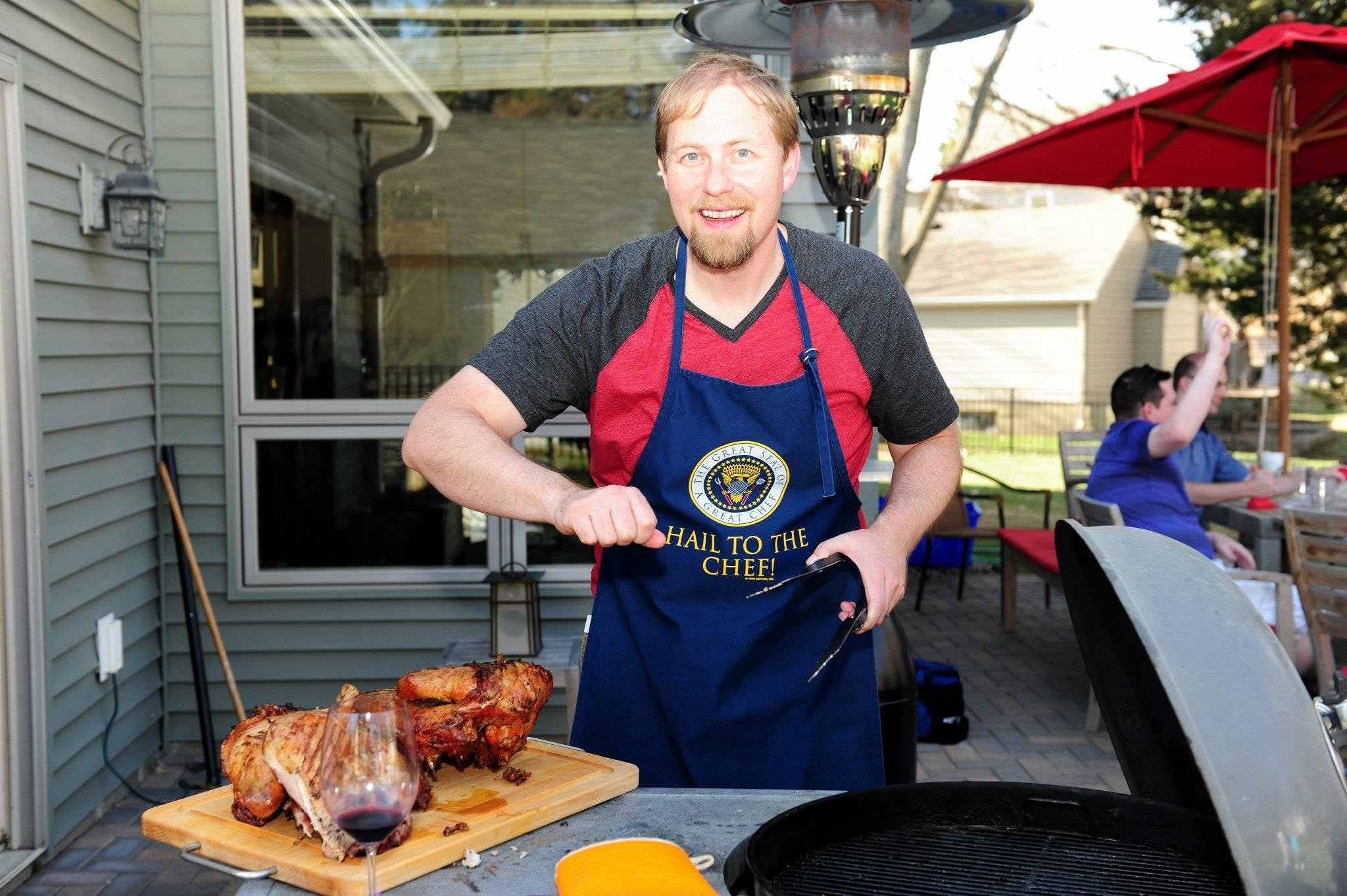
Memory Architect and Chief Turkey Officer